


5 Biohacking Tools I Actually Use: Are They Worth It?
I have a confession to make: I own a ridiculous number of biohacking gadgets.
The fact that I own four different red light therapy devices probably tells you everything you need to know.
Over the years, I’ve experimented with a lot of wellness technology. Some devices seemed exciting at first but eventually ended up forgotten in a cupboard. Others have become such a normal part of my routine that I barely think of them as biohacking anymore.
That’s ultimately my test for any health gadget. It can have impressive technology and fascinating research behind it, but if it’s inconvenient or I don’t feel I’m getting anything from using it, I’m probably not going to keep doing it.
The five biohacking tools below are different. These are devices I genuinely use, from the blue-light blocking glasses I put on every evening to the vagus nerve stimulator I use in bed before going to sleep. Some have considerably more research behind them than others, but all five have earned a place in my routine.
So, what do these popular biohacking tools actually do, what does the science say, and after spending my own money on them, do I think they’re worth it?
1. Red Light Therapy
If there’s one area where I’ve clearly gone beyond what any reasonable person needs, it’s red light therapy. I currently own a red light therapy face mask, a chest mask, a full-body red light therapy blanket and a red light panel. No, you absolutely don’t need all four.
But surprisingly, I do find myself using them for different purposes. A face mask is incredibly convenient when I specifically want to target my skin. The chest mask makes targeted treatment easy, while the blanket gives me a completely different full-body experience. The panel is probably the most versatile because I can use it on different areas depending on what I want to target.
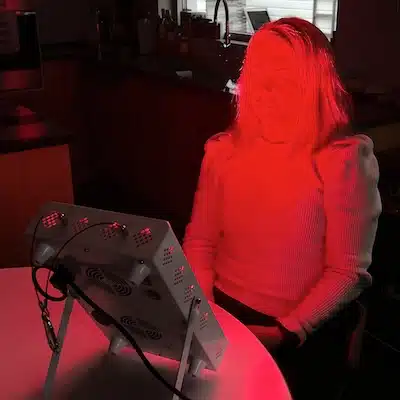
How Does Red Light Therapy Work?
Red light therapy is a form of photobiomodulation, which uses specific wavelengths of red and near-infrared light. Unlike ultraviolet light, which can damage skin cells, red and near-infrared light are being investigated for their effects on cellular function.
One proposed mechanism involves the mitochondria, the structures inside our cells responsible for producing much of the energy our cells use. Light at certain wavelengths appears to interact with cytochrome c oxidase in the mitochondrial respiratory chain, potentially influencing cellular energy production and signaling.
This helps explain why photobiomodulation has been studied in such a surprisingly wide range of areas, including skin health, wound healing, pain, inflammation, exercise recovery and musculoskeletal conditions.
And red light therapy is no longer a niche research area. A 2025 umbrella review brought together 15 meta-analyses covering 204 randomized controlled trials and more than 9,000 participants, assessing photobiomodulation across 35 health outcomes. The strength of evidence varied considerably depending on the application, but the sheer amount of clinical research helps explain why red light therapy has moved far beyond the biohacking fringe.
For me, this is one of the biggest reasons red light therapy has remained in my routine. It’s easy to use, completely passive and versatile enough that I can choose the device that makes sense at the time.
Would I buy red light therapy again? Absolutely. Would I buy four devices again? That’s a different question.
If you’re starting out, I would probably choose one versatile device rather than immediately building the slightly excessive collection I have.
2. Blue-Light Blocking Glasses
Of all the biohacking tools on this list, my blue-light blocking glasses are probably the simplest. They’re also one of the ones I use most consistently.
I wear my Swanwick blue-light blocking glasses every night, and I’ve noticed a difference in my sleep. I find them particularly useful on evenings when I’ve spent a lot of time on my laptop or phone. The reason comes back to our circadian rhythm.
Light isn’t only necessary for vision. It’s also one of the most important signals our brain uses to determine what time of day it is. Morning daylight helps tell the body that the day has begun, while darkness in the evening is part of the biological signal that it’s approaching time to sleep.
Modern life has changed that environment dramatically. Instead of darkness after sunset, many of us spend our evenings surrounded by artificial lighting, televisions, laptops and phones.
Do Blue-Light Blocking Glasses Actually Work?
Research specifically examining blue-light blocking glasses and sleep has produced interesting results. A systematic review identified 29 experimental publications involving evening use of blue-blocking glasses, including 16 randomized controlled trials involving 453 participants. Among studies focused on sleep, the researchers found substantial evidence for reducing the time it took people with sleep disorders, jet lag or variable shift schedules to fall asleep.
Swanwick has also had its Swannies evaluated by SleepScore Labs. Their validation study followed participants across more than 1,300 tracked nights and reported improvements in several self-reported sleep measures. Objective tracking also showed average deep sleep increasing from 59 to 63 minutes during the Swannies period.
For me, though, this is one of those occasions where my personal experience matters too. I’ve worn them consistently enough to notice how different an evening of laptop or phone use feels when I’m wearing them compared with when I’m not.
Short-wavelength blue light is particularly effective at stimulating the retinal cells involved in circadian signaling. Evening exposure can suppress melatonin and shift circadian timing, which is why reducing exposure to bright and blue-enriched light before bed has become such an interesting area of sleep research.
The Blue-Light Blockers I Use
I use Swanwick Swannies every evening, normally as part of my wind-down routine. They’re especially valuable to me because I’m realistic enough to know I’m not going to stop using screens every evening simply because it’s healthier for my circadian rhythm.
Blue-light blockers give me a practical middle ground.
GET 10% OFF SWANWICK WITH THE LINK BELOW
3. Hydrogen Water
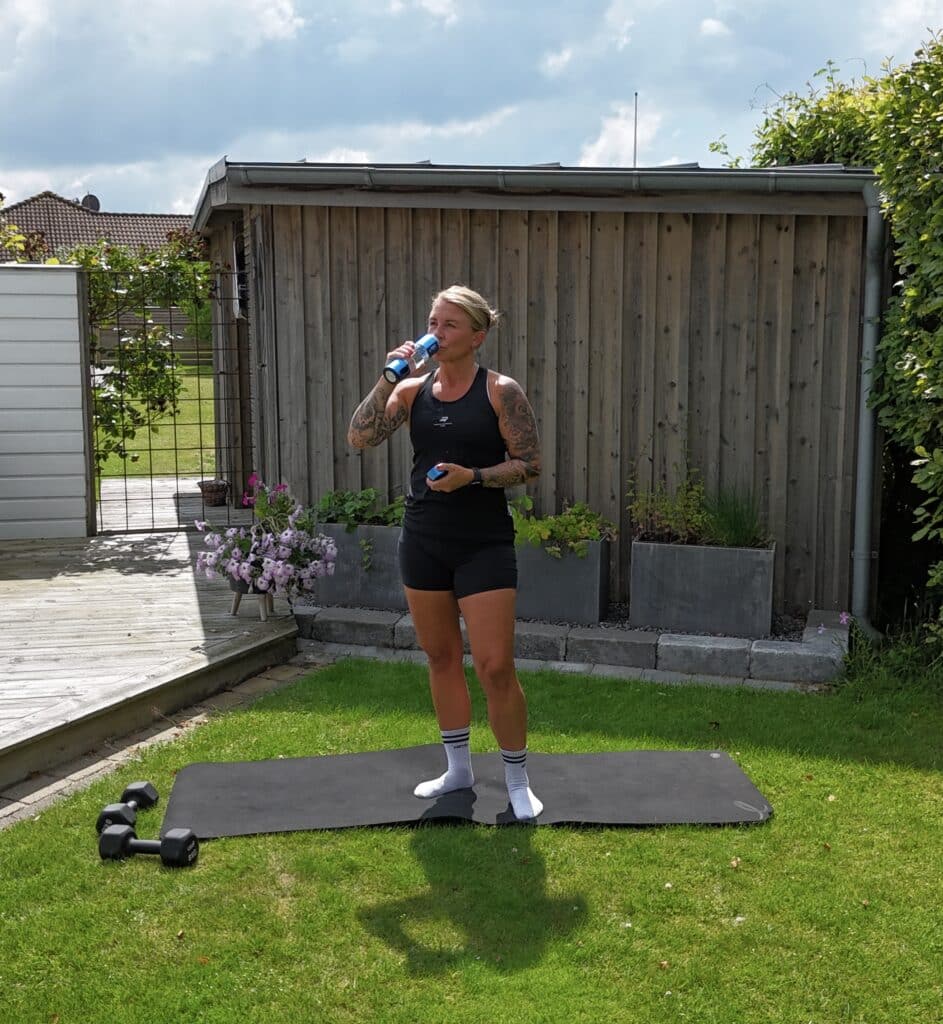
Hydrogen water is probably one of the stranger-sounding things in my wellness routine. After all, it looks and tastes like ordinary water.
Hydrogen-rich water is essentially water containing dissolved molecular hydrogen gas (H₂). Molecular hydrogen has attracted scientific interest because of its potential effects on redox signaling, oxidative stress and inflammation.
Research has expanded substantially over the past few years. A 2024 systematic review examining hydrogen-rich water included 25 human studies across areas ranging from exercise and metabolic health to cardiovascular and neurological outcomes.
Exercise research is particularly interesting to me because I train regularly. A 2024 systematic review and meta-analysis examining molecular hydrogen and exercise performance included 27 publications and 597 participants. It found small improvements in lower-body explosive power and reductions in perceived exertion and blood lactate.
Another meta-analysis looking specifically at exercise-induced oxidative stress found improved antioxidant capacity following molecular hydrogen supplementation, particularly during intermittent exercise.
Hydrogen-rich water is also being investigated in metabolic health. A 2026 meta-analysis of 13 randomized controlled trials involving 757 participants with overweight, obesity or associated metabolic conditions found small reductions in total and LDL cholesterol.
It’s still an evolving research field, but that’s also part of what makes hydrogen water interesting to me as someone who enjoys following emerging longevity and biohacking research.
Why the Hydrogen Bottle Matters
One thing that’s easy to overlook is that buying a “hydrogen water bottle” doesn’t automatically mean you’re getting meaningful amounts of molecular hydrogen.
That’s one reason I use Nord Hydrogen. Their bottle is IHSA-certified and has been independently tested by multiple organizations. H2 Analytics measured 5.14 mg/L of dissolved hydrogen after a 10-minute cycle using headspace gas chromatography, while separate testing by H₂HUBB measured an average of 4.75 mg/L. Nord also publishes independent testing for contaminants including heavy metals and PFAS.
I appreciate that because with a product like this, I don’t simply want a bottle that lights up and produces bubbles. I want to know what’s actually in the water.
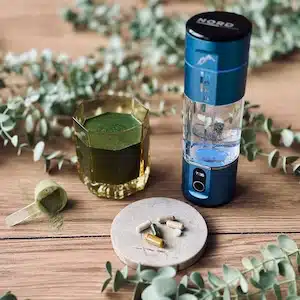
The Hydrogen Water Bottle I Use
I use the Nord Hydrogen Bottle, an IHSA-certified and independently tested hydrogen water bottle.
Use code HACKS4WELLNESS
4. PEMF Mat
My PEMF mat is a different kind of biohacking tool because I don’t use it every day. Instead, it has become part of my weekly recovery routine.
PEMF stands for pulsed electromagnetic field therapy. A PEMF device generates changing electromagnetic fields through coils, exposing the body to electromagnetic pulses at selected frequencies and intensities.
This isn’t simply a wellness technology invented for Instagram. Electromagnetic therapies have been investigated clinically for decades, with PEMF studied in areas including bone healing, pain, osteoarthritis and musculoskeletal recovery.
The recovery side is what originally interested me. In one randomized, double-blind, placebo-controlled trial, researchers induced delayed-onset muscle soreness in healthy participants and found that PEMF treatment improved recovery in muscle soreness and several measures of muscle function compared with sham treatment.
That’s relevant to me because my typical week can contain CrossFit, running, tennis, walking and other training. I don’t expect lying on a mat to replace the things that actually drive recovery, such as adequate sleep, nutrition and rest, but I enjoy incorporating it into my recovery routine.
Why I Also Use My PEMF Mat for Grounding
There’s another reason I particularly enjoy my PEMF mat, especially during the winter months. My mat can be set to 7.83 Hz, the fundamental Schumann resonance, a naturally occurring electromagnetic resonance in the space between the Earth’s surface and the ionosphere. This frequency is often referred to as the Earth’s natural electromagnetic frequency and is one reason it appears as a setting on many PEMF devices.
During the warmer months, I spend a lot of time outside and naturally feel much more connected to the outdoors. Swedish winter is another story. That’s when I particularly enjoy setting my PEMF mat to 7.83 Hz and using it as part of my grounding and relaxation routine.
Technically, this isn’t the same as earthing, which involves direct conductive contact with the Earth, such as standing barefoot on the ground. A PEMF mat instead generates a pulsed electromagnetic field at the same frequency as the fundamental Schumann resonance.
For me, though, it’s become a lovely winter ritual. Once or twice a week, I’ll lie on the mat, select the 7.83 Hz setting and simply slow down for a while. I find it deeply relaxing, and it’s one of the reasons my PEMF mat has remained part of my routine.
Would I buy one again? Yes. But unlike my blue-light blockers or vagus nerve stimulator, I consider it an optional recovery and relaxation tool rather than something I need to use every day.
5. Vagus Nerve Stimulation
The final biohacking device on my list is one I use every night.
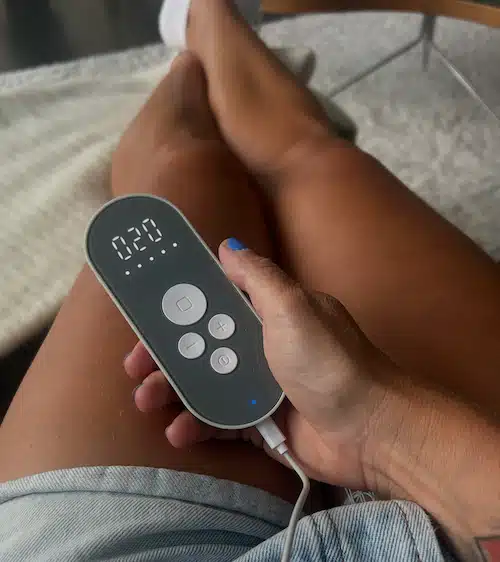
When I’m lying in bed, I attach my vagus nerve stimulator to my ear and use it for around 20 minutes. I find the experience incredibly calming. I feel myself relaxing while I use it, and I’ve also noticed that I seem to sleep better when it’s part of my evening routine.
The vagus nerve is one of the major communication pathways between the brain and the body and plays an important role in the parasympathetic nervous system, which is involved in functions associated with rest, digestion and recovery.
Traditional vagus nerve stimulation involves an implanted medical device and has established clinical applications. Newer transcutaneous vagus nerve stimulation, or tVNS, aims to stimulate accessible branches of the vagus nerve through the skin without surgery.
The ear is particularly interesting because the auricular branch of the vagus nerve can be accessed in parts of the external ear. That’s the approach used by my device.
Vagus Nerve Stimulation and Sleep
The emerging sleep research is one of the reasons I’ve become particularly interested in this technology.
A randomized clinical trial published in JAMA Network Open investigated transcutaneous auricular vagus nerve stimulation (taVNS) in people with chronic insomnia. Participants received either active or sham stimulation for 30 minutes twice a day, five days per week for eight weeks. The researchers found clinically meaningful improvements in insomnia severity with active stimulation that persisted during follow-up.
That’s obviously a considerably more intensive protocol than my own 20-minute bedtime routine, but I find the research fascinating because it overlaps with what I’ve noticed personally: vagus nerve stimulation makes me feel remarkably calm, and I feel that my sleep is better when I use it consistently.
It has also become something of a behavioral signal. I attach the device, lie down and spend 20 minutes doing very little. My body knows the day is ending.
Whether all of that effect comes from the stimulation itself or partly from the relaxing routine surrounding it isn’t particularly important to me. It’s one of the tools I notice when I stop using it, which is usually a pretty good indication that something has earned a place in my routine.
Do You Need Biohacking Gadgets to Be Healthy?
Definitely not.
If someone asked me whether they should buy a red light panel or start strength training, I’d tell them to start strength training. If the choice were between an expensive PEMF mat and consistently getting enough sleep, I’d choose sleep.
The foundations of health aren’t particularly glamorous: move your body, build and maintain muscle, eat nutritious food, get enough protein, spend time outside, protect your sleep and maintain meaningful relationships.
Biohacking gadgets sit on top of those foundations. They don’t replace them.
But I also don’t think that makes wellness technology pointless.
One of the things I enjoy about biohacking is experimenting with tools that make healthy behaviors easier, give me useful information or help me feel and recover better. My blue-light blocking glasses make it easier to protect my evenings even when I’m using screens. My red light devices make photobiomodulation something I can do at home. My hydrogen bottle makes hydrogen-rich water available whenever I want it. My PEMF mat creates a recovery ritual, and my vagus nerve stimulator has become part of how I wind down before sleep.
That’s where I think biohacking technology can be genuinely useful.
Frequently Asked Questions
What are biohacking tools?
Biohacking tools are devices or technologies used to measure, influence or support aspects of health, sleep, recovery, performance or well-being. Examples include red light therapy devices, blue-light blocking glasses, hydrogen water bottles, PEMF mats, vagus nerve stimulators, wearables and continuous glucose monitors.
What are the best biohacking tools for beginners?
Blue-light blocking glasses are one of the easiest and least disruptive tools to introduce, particularly if you spend a lot of time looking at screens in the evening. Red light therapy is another popular option because home devices are easy to incorporate into an existing routine.
Does red light therapy really work?
Red light therapy, or photobiomodulation, has been studied extensively across a variety of applications. A 2025 umbrella review included 204 randomized controlled trials and more than 9,000 participants, although the strength of evidence differed substantially depending on the health outcome being studied.
Is hydrogen water actually beneficial?
Hydrogen-rich water is an emerging research area. Human trials and systematic reviews have investigated potential effects on metabolic health, oxidative stress, inflammation, exercise and recovery. Some outcomes are promising, while effects differ depending on the population, hydrogen dose and outcome being measured.
What does a PEMF mat do?
A PEMF mat exposes the body to pulsed electromagnetic fields. PEMF therapy has been investigated for applications including bone healing, pain, musculoskeletal conditions and recovery. Some randomized research has also reported improvements in measures associated with exercise-induced muscle soreness.
Can vagus nerve stimulation help with sleep?
Research into transcutaneous auricular vagus nerve stimulation and sleep is developing. A randomized clinical trial in people with chronic insomnia found improvements in insomnia severity following an eight-week taVNS intervention compared with sham stimulation.

