

How to Build Healthy Habits That Actually Stick (And Why I Created Becomly)
The secret to better health isn’t doing everything perfectly. It’s building daily habits that support the person you want to become. Here’s what science tells us about lasting behavior change, and why I decided to create an app to make the process easier.
We all know that eating nutritious food, exercising regularly, getting enough sleep, and managing stress are essential for long-term health. Yet knowing what we should do and consistently doing it are two very different things.
Most of us have experienced the excitement of starting a new health routine. We promise ourselves we’ll exercise every morning, eat healthier, spend less time scrolling, or finally prioritize sleep. For the first few days, motivation carries us forward. Then life gets busy, routines change, and those good intentions slowly disappear.
But what if the problem isn’t a lack of motivation? What if the secret to lasting change is learning how to make healthy behaviors part of our everyday lives?
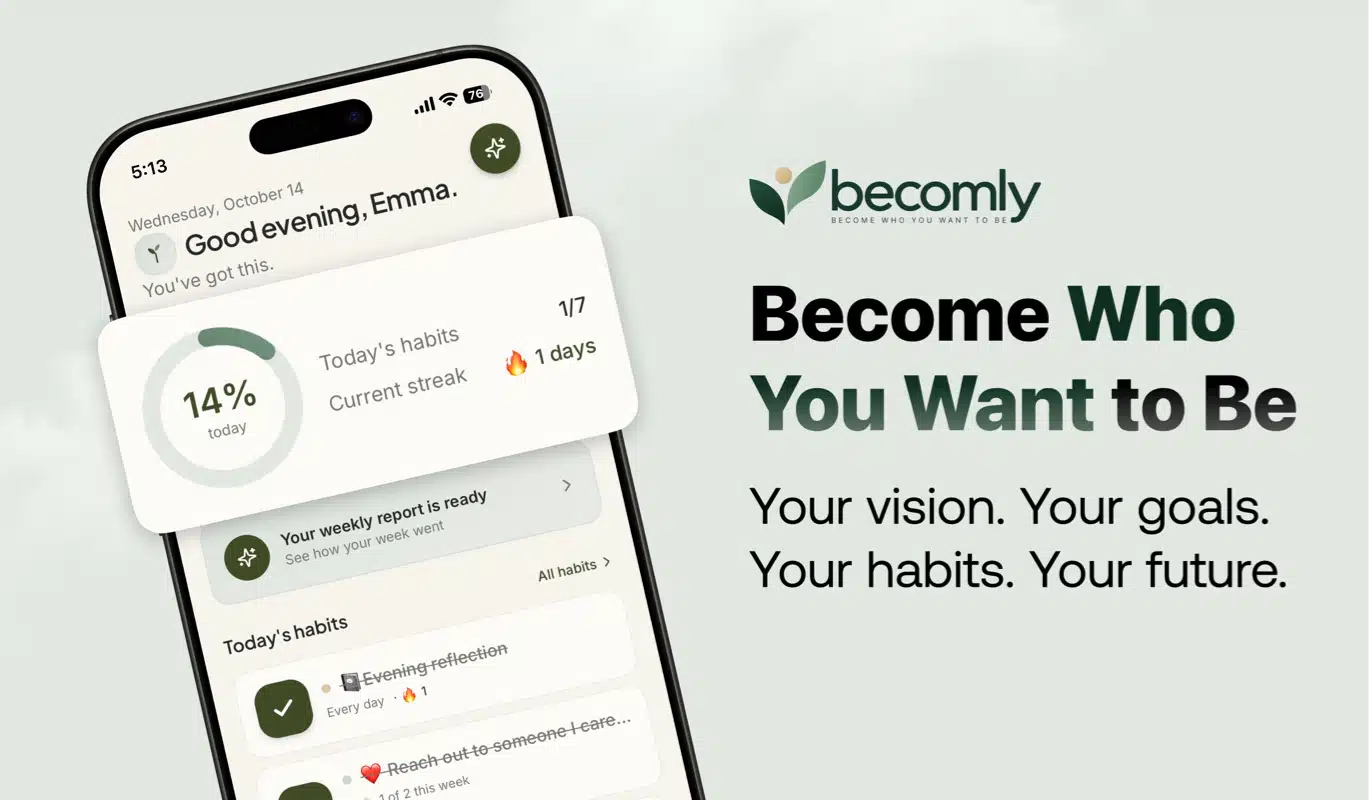
The science of habit formation offers some fascinating answers. And it’s also one of the reasons I created Becomly, a new personal growth app designed to help people build better habits, achieve meaningful goals, and create lasting change.
Why Healthy Habits Matter More Than We Think
When we talk about longevity and healthy aging, it’s easy to focus on the latest scientific discoveries, supplements, or biohacking technologies. But some of the most powerful tools for supporting long-term health are surprisingly simple.
Regular physical activity, strength training, nutritious food, restorative sleep, and stress management form the foundation of a healthy lifestyle. The challenge is turning these behaviors into something we do consistently rather than occasionally.
Consider strength training. We know that maintaining muscle mass and strength becomes increasingly important as we age, particularly for women navigating perimenopause and menopause. But knowing that strength training is beneficial doesn’t automatically translate into exercising several times a week.
The same applies to sleep, nutrition, and daily movement. Their long-term benefits depend largely on what we repeatedly do.
This is where habits become so important. Instead of relying on willpower to make healthy decisions every day, we can create routines that make those decisions easier and more automatic.
The Science of Building Habits That Last
One of the biggest misconceptions about habit formation is the popular belief that it takes exactly 21 days to build a new habit.
In reality, the process is far more individual.
A well-known 2010 study published in the European Journal of Social Psychology investigated how habits develop in everyday life. Researchers followed participants who selected a new eating, drinking, or physical activity behavior and repeated it in a consistent context.
The results showed that the time required for behaviors to become automatic varied considerably, ranging from 18 to 254 days among participants whose habit-formation patterns could be modeled.
Interestingly, the researchers also found that missing one opportunity to perform the behavior did not materially disrupt the habit-formation process. This highlights two important principles: consistency matters, and perfection isn’t necessary.
Research published in the Annual Review of Psychology also explains how habits develop through repeated behaviors in familiar contexts. Over time, environmental cues begin triggering actions with less conscious effort.
For example, taking a walk immediately after lunch or preparing your workout clothes before bed creates a connection between an existing routine and a desired behavior. Eventually, the action becomes a more natural part of your day. The goal isn’t to feel motivated every single morning. It’s to build a routine that works even when motivation is low.
5 Practical Ways to Make Healthy Habits Stick
Understanding the science is one thing. Applying it to everyday life is where real change begins.
1. Start Smaller Than You Think You Need To
One of the most common mistakes people make is trying to change too many things simultaneously.
Instead of committing to an hour of exercise every day, start with a ten-minute walk. Rather than completely overhauling your diet, begin by adding a protein-rich breakfast or an extra serving of vegetables.
Small actions are easier to repeat, and repetition is what strengthens a habit. Once a behavior becomes established, you can gradually build on it.
2. Connect New Habits to Existing Routines
A simple strategy is to attach a new behavior to something you already do consistently.
For example, you might practice five minutes of mobility exercises after brushing your teeth, take a short walk after dinner, or spend a few minutes journaling before going to bed.
By linking a new action to an established routine, you create a reliable reminder that helps the behavior become part of everyday life.
3. Make Your Goals Specific and Achievable
There’s a significant difference between deciding to “exercise more” and setting a goal to complete three strength-training sessions each week.
Specific goals provide direction and make it easier to recognize progress.
A 2024 systematic review and meta-analysis found that interventions involving specific goal setting had a positive effect on physical activity among insufficiently active adults.
When your goals are clear, you know exactly what you’re working toward and what actions will help you get there.
4. Track Your Progress
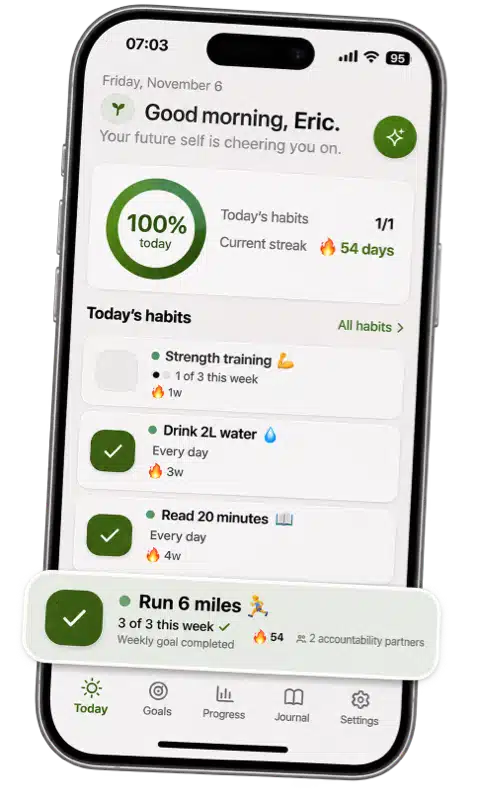
One of the most effective ways to maintain consistency is to make your progress visible. Tracking your habits helps you recognize patterns, celebrate achievements, and identify areas where you might need to adjust your routine.
Research on behavior-change interventions has repeatedly examined self-monitoring as an important strategy for supporting healthier behaviors, including physical activity.
And there’s something motivating about looking back and realizing how many small actions you’ve completed over the past month.
A five-minute walk might not feel particularly significant today. But seeing weeks of consistent movement reminds you that you’re building something meaningful.
5. Focus on Progress, Not Perfection
Healthy habits should support your life, not become another source of stress. There will be days when you miss a workout, sleep poorly, or don’t follow your usual routine. That’s part of being human. The important thing is what happens next.
Instead of abandoning a habit because you missed one day, simply return to it at the next opportunity. Sustainable behavior change is about building a pattern you can maintain over months and years. And as the habit-formation research suggests, one missed day doesn’t erase your progress.
Why I Created Becomly
My interest in personal development, goal setting, and building intentional habits began long before I started Hacks4Wellness. When I was younger, I built a business that I eventually sold in my thirties. During those years, I regularly used vision boards, clearly defined goals, and daily habits to stay focused on what I wanted to achieve. Those tools helped me turn ambitious ideas into concrete actions.
Over time, I realized that the same principles could be applied to almost every area of life, especially our health. Whether the goal is to become stronger, improve sleep, develop healthier eating habits, or simply feel better in everyday life, meaningful progress usually comes from the small things we do consistently.
As someone passionate about public health, nutrition, longevity, and personal development, I’ve become increasingly convinced that creating an environment that supports healthy behaviors is just as important as understanding their benefits.
That’s what inspired me to create Becomly.
I wanted to bring together the tools I’d personally found valuable, including vision boards, goal setting, habit tracking, journaling, and progress monitoring, in one simple and motivating app. Something that could help people move beyond good intentions and actually follow through on the changes they want to make.
Meet Becomly: Turn Your Health Goals Into Daily Habits
Becomly is an all-in-one personal growth app designed to help you create a vision for your future and take meaningful steps toward achieving it.
Whether you’re working on improving your health, developing a new fitness routine, building confidence, or creating more balance in your life, Becomly gives you practical tools to support your progress.
With Becomly, you can:
✓ Build and track healthy habits. Create daily, weekly, or monthly routines for exercise, movement, hydration, sleep, mindfulness, and more.
✓ Set meaningful goals. Turn larger ambitions into smaller, manageable steps and connect them with your everyday habits.
✓ Create vision boards. Keep your long-term aspirations visible and remind yourself why you’re working toward them.
✓ Journal and reflect. Make time for gratitude, self-reflection, and recognizing personal growth.
✓ Monitor your progress. Follow your streaks, review your achievements, and see how your habits develop over time.
✓ Stay accountable. Share selected habits and goals with friends or accountability partners for additional encouragement.
For example, if your long-term goal is to become stronger and maintain muscle mass as you age, you could set a strength-training goal and connect it to a habit of exercising three times per week.
Or if improving sleep is your priority, you could track an evening routine that includes putting away your phone, practicing relaxation, and maintaining a consistent bedtime.
The idea is simple: make your goals visible, your actions manageable, and your progress easier to recognize.
Your Health Is Built One Habit at a Time
When it comes to longevity, we often think about the future. We want to remain active, independent, energetic, and healthy for as many years as possible. But the foundation for that future is being built right now. It’s built through the walks we take, the strength-training sessions we complete, the meals we prepare, the sleep we prioritize, and the moments we make for recovery.
You don’t need to transform your entire lifestyle overnight. You need to identify what matters most, create a realistic plan, and keep showing up for yourself. That’s the philosophy behind Becomly, and it’s something I hope will help more people turn their health ambitions into lasting routines.
A healthier, happier future starts with the habits you build today.
If you’re ready to start building better habits and working toward your goals, I’d love for you to try Becomly.
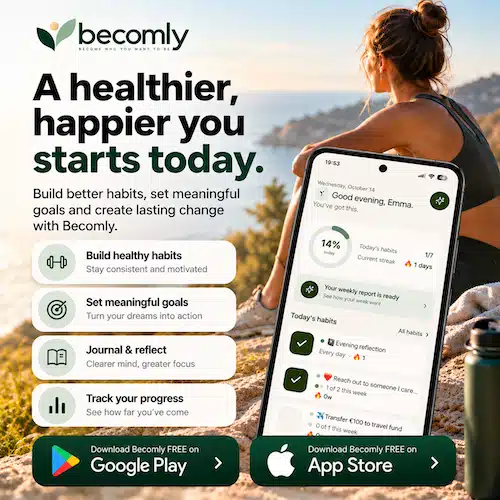
🌱 Becomly is now available to download for FREE on iOS and Android.
Download Becomly on the App Store
Download Becomly on Google Play
Or visit Becomly.app to learn more.
Small habits. Big changes. Become who you want to be.
References
1. Lally, P., et al. (2010). How are habits formed: Modelling habit formation in the real world. European Journal of Social Psychology.
2.Wood, W., & Rünger, D. (2016). Psychology of Habit. Annual Review of Psychology.
3. What Effect Do Goal Setting Interventions Have on Physical Activity and Psychological Outcomes in Insufficiently Active Adults? (2024). Systematic Review and Meta-Analysis.
4.Krukowski, R. A., et al. (2024). Impact of feedback generation and presentation on self-monitoring behaviors, dietary intake, physical activity, and weight. International Journal of Behavioral Nutrition and Physical Activity.

