


Why Longevity Habits Don’t Stick, and How to Build Ones That Do After 40
We are living through a golden age of longevity information. There has never been more of it: studies, protocols, podcasts, endless advice on how to age well. And after years of writing about this, with a background in public health and my own trip through perimenopause, here is the honest truth I keep landing on: for most women over 40, the problem is not a lack of information.
We know we should lift weights, prioritize protein, protect our sleep, keep our stress in check, and move more. I have written about what actually matters for longevity after 40 more than once. We have known this stuff for years.
And yet.
If knowing were enough, we would all be thriving. Instead, most of us start strong on a Monday, go all in for two weeks, and then quietly drift back to where we began by the end of the month. And then we do the cruelest part. We blame ourselves. We decide we lack discipline, or motivation, or willpower.
I want to gently push back on that story. The reason your longevity habits do not stick is almost never a character flaw. It is a design problem. And design problems can be fixed.
Why longevity habits stop sticking after 40
Here is what I see over and over. The habits do not fail because we are weak. They fail for a handful of very specific, very human reasons.
We rely on motivation. Motivation is wonderful and completely unreliable. It shows up loudly in January and vanishes the first week you are tired, traveling, or stressed.
We go all or nothing. We do not just add a daily walk. We commit to an hour at the gym, a full diet overhaul, cold plunges, and a new supplement stack, all beginning Monday. The plan is so big that missing a single day feels like failure, and failure feels like a reason to quit the whole thing.
We borrow someone else’s protocol. We copy the exact routine of a 30-year-old biohacker, or a woman with a completely different body and life, and then wonder why it does not fit ours.
And we expect it to feel good right away. Real change is quiet at the start. When two weeks of honest effort do not show up in the mirror or on a lab report, we decide it is not working and stop, usually right before the point where it actually would have.
And we lean on willpower when we should lean on our environment. Willpower gets all the credit. But it is the snacks on the counter, the workout clothes still folded in the drawer, and the phone charging right by the bed that quietly make the decision for us, long before we consciously do.
Then, after 40, two more things stack on top of all of that. We simply have less spare time and energy than we did at 25. And our hormones are shifting, which changes how we sleep, how we recover, and how we handle stress. A plan that ignores those realities will not survive its first real week.
None of this means you are doing it wrong. It means the approach was never built to last in the first place.
The quiet truth: consistency beats intensity
If you have been around here for a while, you know this is my drum to beat. Consistency beats intensity, every single time.
A ten-minute walk you take almost every day will do more for your long-term health than the perfect ninety-minute workout you manage twice and then abandon. Two solid strength sessions a week, kept up for a year, will reshape your body and your aging far more than a punishing six-day plan you hold onto for three weeks. The research on this is not subtle. The people who age well are almost never the ones who trained the hardest for a month. They are the ones who kept moving, decade after decade.
This is genuinely good news, because it takes the pressure off. You do not need the perfect plan. You need a good-enough plan that you will actually repeat. The magic was never in the intensity of any single day. It is in the boring, beautiful accumulation of showing up.
So the real question stops being “what is the optimal routine?” and becomes something much kinder: what is the smallest version of this that I will actually do on a hard day?
A framework for building habits that stick
Here is a simple framework that helps. Five steps, none of them dramatic.
- Start absurdly small. Smaller than feels worth it. Not “strength train four times a week,” but “do two sets of squats after I brush my teeth.” At the beginning the goal is not results. It is proof to yourself that you are someone who follows through. You can always scale up later. You cannot scale up something you have already quit.
- Anchor it to something you already do. Do not go looking for new time, because you do not have any. Attach the new habit to an old one. Protein with the breakfast you already eat, a walk right after the school run, ten minutes of mobility while the coffee brews. The habit you already have becomes the reminder for the one you want.
- Personalize it to your body and your life. This is the step almost every plan skips, and the one that matters most after 40. More on it in a moment.
- Track one simple thing. Not fifteen metrics, just one. How many days did I move this week? How do I feel at three in the afternoon? A single honest signal keeps you connected to reality and shows you progress you would otherwise talk yourself out of seeing.
- Do not run it on willpower alone. This is the piece nearly everyone underestimates. The women who stay consistent are rarely the most disciplined. They are the ones who set things up so they do not have to be. That might be a friend you walk with, a standing appointment you will not cancel, or having personalized support in your corner so that on the days your motivation is gone, the plan happens anyway. Willpower is a battery, and the goal is to build a routine that does not drain it.
Notice that none of these steps are impressive on their own. That is the entire point. Impressive is not what makes a habit last. Repeatable is.
What personalization actually looks like
I want to sit here a little longer, because “just personalize it” is easy to say and much harder to picture.
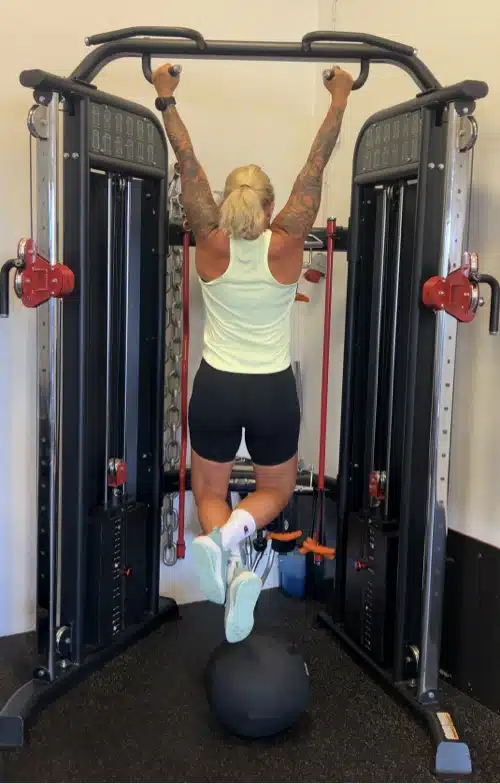
Women do not respond to health advice the way men do. And honestly, we do not even respond the same way as each other. Fasting that leaves one woman clear and energized leaves another wired, hungry, and exhausted. Training that suits you in one season of life quietly wrecks your sleep in another. What your body needs in your early 40s, perimenopausal and running on broken sleep, is not what it needed at 30.
Personalization simply means building your routine around your reality instead of a generic template. It means asking honest questions. When in the day do I actually have energy? What kind of movement do I look forward to, or at least not dread? Where is my sleep right now, and what is one small thing that would protect it? What did last week genuinely look like, not the ideal version of it?
Here is a small example of what that looks like in practice. So many women assume they should train first thing in the morning, because that is what all the productivity advice insists on, and then feel guilty every time they skip it. But if your energy truly peaks in the afternoon, moving your workout there can turn a daily battle into something that simply happens. Nothing about the exercise itself changed. Only the fit to a real life did. That is personalization in a nutshell. It is rarely about a fancier protocol, and almost always about matching the plan to the person following it.
This only matters more as your hormones shift. What works at the start of your 40s may need tweaking a few years in, and that is not you failing, it is you paying attention. The willingness to adjust, again and again, is not a lack of discipline. It is the whole skill.
The most sustainable routine is not the most advanced one. It is the one that flexes with your life, which is exactly why it lasts. If you want help shaping all of this into a plan built around your life instead of a generic protocol, it is worth leaning on, because a routine that fits you is a routine you keep.
The payoff: small habits, compounded
Here is what I most want you to take from this. You are not behind. You do not need to overhaul your entire life this week.
Longevity is not built in heroic bursts. It is built in the small, unglamorous things you repeat for years: the walk, the protein, the two strength sessions, the slightly earlier bedtime. Each one is almost too small to feel important on the day you do it. Compounded over months and years, they turn out to be everything.
So please do not close this tab and try to fix all of it tonight. Pick one habit. Make it absurdly small. Anchor it to your day. Shape it around your real life. And set things up so you are not white-knuckling your way through it. That is how the knowing finally turns into the doing.
You already know what to do. Let us make it something you actually keep.
FAQ
I have no time. Where do I even start?
Start with the two-minute version of one habit, attached to something you already do every day. Having no time is exactly why you start small. It is not a reason to wait for life to calm down, because it will not.
How long until I see results?
Some things, like energy and sleep, can shift within a couple of weeks. Body composition and the deeper longevity benefits take months. That is the whole reason consistency matters more than intensity. You are playing a long game, and the long game rewards the women who simply keep showing up.
Do I have to track everything?
No, and please do not. Pick one simple signal that tells you the truth, like how many days you moved this week, or how you feel in the afternoon. One honest number beats fifteen you will end up ignoring.
Kajsa Mårtensson is the founder of Hacks4Wellness, where she writes about longevity, healthy aging, and what actually matters for women over 40. With a background in public health and her own experience navigating perimenopause, she focuses on science-informed, realistic habits that fit into a real life.


