

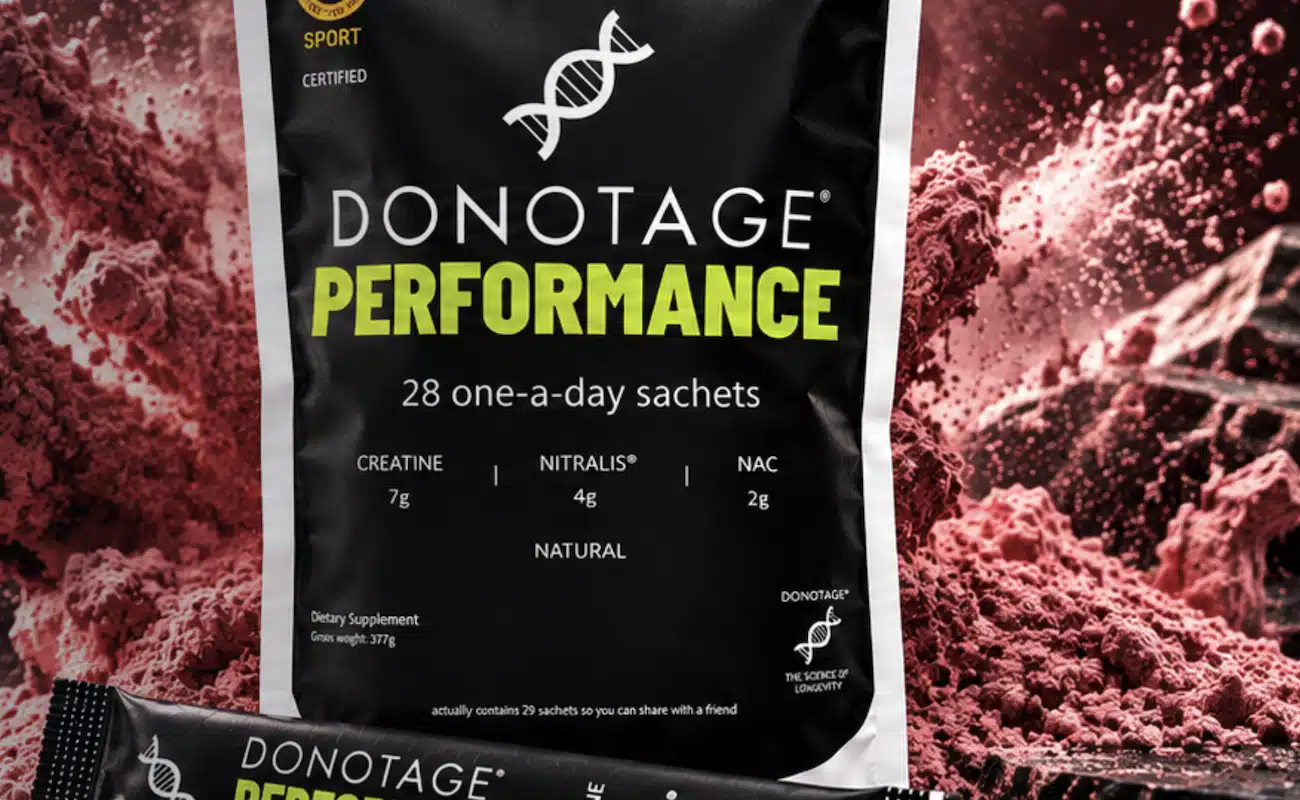
DoNotAge Performance: Creatine Benefits for Muscle, Brain Health & Longevity
I’ve been taking creatine for quite some time, and it’s one of the supplements I genuinely believe deserves a place in more women’s routines, especially after 40. Although creatine has traditionally been associated with bodybuilders and athletes, the research has expanded well beyond muscle growth. Today, scientists are investigating its potential benefits for brain health, cognitive performance and healthy aging.
So when I heard that DoNotAge was launching a new product combining creatine with two additional performance-focused ingredients, I was immediately interested.
My first package of DoNotAge Performance has just arrived, and I’m particularly excited about this addition because I’ve already been using the brand’s 15-in-1 longevity sachets. Creatine was one of the few ingredients I still needed to take separately, so a complementary performance formula makes a lot of sense for my existing routine.
I train regularly, including CrossFit, running and tennis, and I’m increasingly interested in supplements that support not only exercise performance but also long-term strength, recovery and cognitive health.
So what exactly is inside DoNotAge Performance, what does the science say about its ingredients, and why am I planning to make it part of my daily routine?
What Is DoNotAge Performance?
DoNotAge Performance is a new daily powdered supplement designed to support physical performance, circulation and recovery. Unlike many sports supplements containing long lists of ingredients in relatively small amounts, Performance focuses on three active ingredients at clearly disclosed doses.
Each sachet contains:
| Ingredient | Amount per sachet | Main area of interest |
|---|---|---|
| Creatine | 7 g | Muscle strength, power and cellular energy |
| Nitralis® | 4 g | Nitric oxide production and circulation |
| N-acetylcysteine (NAC) | 2 g | Glutathione production and antioxidant support |
The formula is designed to be mixed with water once daily, including rest days. It can be used on its own or alongside the brand’s existing DoNotAge One A Day 15-in-1 longevity sachet.
What caught my attention immediately was the amount of creatine. At 7 grams per serving, Performance provides a substantial daily dose without needing to measure out a separate powder. It also includes Nitralis, DoNotAge’s proprietary nitric oxide formula, and NAC, an ingredient involved in the body’s antioxidant defense system.
But the ingredient I’m most excited about is undoubtedly creatine.
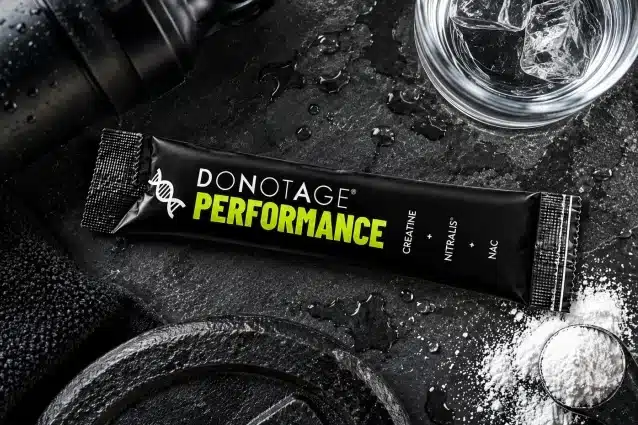
Interested in Trying DoNotAge Performance?
DoNotAge Performance combines 7 g creatine, 4 g Nitralis and 2 g NAC in one daily sachet, designed for people who want to support their training, recovery and long-term health.
You can use it independently or alongside DoNotAge’s existing 15-in-1 longevity sachet.
Creatine: Much More Than a Muscle Supplement
Creatine is one of the most extensively researched sports supplements available, and for good reason. It helps the body regenerate adenosine triphosphate (ATP), the molecule our cells use for energy, particularly during short bursts of intense activity.
When we exercise, our muscles use ATP rapidly. Creatine is stored in the muscles primarily as phosphocreatine, which helps replenish ATP during demanding activities such as sprinting, lifting weights or performing repeated high-intensity efforts.
This is why creatine supplementation has consistently been associated with improvements in strength, power and high-intensity exercise performance, particularly when combined with resistance training.
For someone like me who regularly does CrossFit, this is already a compelling reason to take it. But I think creatine becomes even more interesting when we look at what happens to our bodies as we age.
Why Creatine Is Particularly Interesting for Women Over 40
Maintaining muscle mass and strength is one of the most important things we can do for healthy aging. From our thirties onward, we gradually become more vulnerable to age-related muscle loss, a process that accelerates later in life and can be influenced by hormonal changes, physical activity and nutrition.
For women navigating perimenopause and menopause, preserving muscle becomes especially relevant. Muscle supports metabolic health, physical independence, glucose regulation and our ability to remain active as we grow older.
Resistance training is still the foundation, but creatine can help us get more from that training.
Research involving older adults has found that creatine supplementation combined with resistance exercise can improve lean tissue mass and muscular strength compared with resistance training alone. The benefits are especially relevant because maintaining strength isn’t simply about appearance. It’s about being able to move confidently, stay active and preserve physical function for decades to come.
At 42, this is exactly how I think about training. I’m not lifting weights only for how my body looks today. I’m investing in the strength and muscle I want to have at 60, 70 and beyond. Creatine fits naturally into that approach.
Creatine and Brain Health: The Benefits Beyond Exercise

This is probably the most fascinating area of creatine research to me. Although approximately 95% of the body’s creatine is stored in skeletal muscle, creatine also plays an important role in the brain. Just like muscle cells, brain cells require a constant supply of energy, and the creatine-phosphocreatine system helps support cellular energy availability.
Researchers have therefore become increasingly interested in whether creatine supplementation might support memory, attention and other aspects of cognitive performance.
A 2024 systematic review and meta-analysis published in Frontiers in Nutrition examined 16 randomized controlled trials involving 492 participants. Researchers found that creatine supplementation improved memory and certain measures of attention and information-processing speed. Interestingly, subgroup analyses also suggested potentially greater cognitive benefits in women for some outcomes.
The study adds to growing interest in creatine as more than a sports supplement. Researchers are also investigating its potential relevance to aging-related cognitive changes and situations where the brain’s energy demands are particularly high.
For me, this is one of the reasons creatine has become such an interesting longevity supplement. Supporting muscle function is valuable enough, but the possibility of also supporting brain energy metabolism makes it even more compelling. And as someone interested in both physical and cognitive longevity, I find that combination particularly appealing.
Nitralis®: Supporting Nitric Oxide and Healthy Circulation
The second ingredient in DoNotAge Performance is 4 grams of Nitralis®, a proprietary formula developed by DoNotAge to support nitric oxide availability.
Nitric oxide is a signaling molecule that plays an important role in vascular function. One of its key functions is helping blood vessels relax and widen, a process known as vasodilation. This allows blood to flow more easily and helps regulate circulation and blood pressure.
From an exercise perspective, nitric oxide is interesting because blood flow is essential for delivering oxygen and nutrients to working muscles.
Nitric oxide pathways have therefore become an important area of research in sports nutrition, particularly in relation to endurance, exercise efficiency and cardiovascular function.
DoNotAge reports that a randomized, placebo-controlled study involving 85 adults found increased nitric oxide levels after 30 days of Nitralis supplementation compared with placebo.
This is particularly interesting because Nitralis is designed to support a different aspect of performance from creatine. While creatine helps with rapid cellular energy regeneration, nitric oxide supports vascular signaling and circulation. Together, they address two different physiological processes relevant to exercise.
NAC: Glutathione, Antioxidants and Exercise Recovery
The third ingredient is N-acetylcysteine (NAC), with 2 grams included in each daily sachet. NAC is a derivative of the amino acid cysteine and is particularly interesting because cysteine is needed to produce glutathione, one of the body’s most important endogenous antioxidants.
Glutathione helps maintain cellular redox balance and participates in processes that protect cells from excessive oxidative damage. During exercise, our bodies naturally produce reactive oxygen species. This isn’t inherently negative; oxidative signaling is part of how the body adapts to training. However, demanding exercise also places additional stress on our cellular defense systems, which has led researchers to investigate whether NAC supplementation can influence fatigue, oxidative stress and recovery.
Some studies have reported improvements in antioxidant markers and certain measures of exercise performance following NAC supplementation. DoNotAge highlights research in triathletes that found improvements in sprint performance and antioxidant-related outcomes.
What makes NAC an interesting addition to Performance is that it complements the other two ingredients through a different mechanism. Creatine focuses on cellular energy availability, Nitralis on nitric oxide and vascular function, and NAC on glutathione synthesis and antioxidant defense. It’s a relatively simple formula, but the three ingredients have distinct physiological roles.
Why Professor Sergej Ostojic’s Involvement Caught My Attention
One interesting detail is that Professor Sergej M. Ostojic, an internationally recognized researcher in creatine biology and human performance, has chosen DoNotAge Performance. Ostojic is a physician and researcher whose work includes creatine metabolism, cellular bioenergetics and human performance. He’s also a member of DoNotAge’s Scientific Advisory Board.
His research interests extend beyond creatine’s traditional applications in sport, including its potential roles in brain energy metabolism and healthy aging.
I find that particularly relevant because it’s exactly the direction in which my own interest in creatine has developed. I originally started taking it for training, but the research into its broader benefits has made me appreciate it on a completely different level. It’s encouraging to see researchers with extensive experience in creatine involved with companies developing products around these emerging areas of interest.
A Smart Addition to My Supplement Routine
What I particularly like about DoNotAge Performance is that it brings together three ingredients with different but complementary benefits. Creatine is already one of my favorite supplements, not only for strength and exercise performance but also because of the growing research into brain health and healthy aging. Adding Nitralis and NAC makes this an interesting combination for anyone focused on physical performance and long-term health.
As someone who trains regularly and already uses DoNotAge’s 15-in-1 longevity sachets, DoNotAge Performance feels like a natural addition to my routine. I also appreciate the convenience of having everything in one daily sachet rather than managing several separate supplements.
Frequently Asked Questions
What is DoNotAge Performance?
DoNotAge Performance is a daily powdered supplement containing 7 grams of creatine, 4 grams of Nitralis and 2 grams of NAC. It’s designed to support exercise performance, circulation and recovery.
Is creatine good for women over 40?
Creatine can be particularly useful for women over 40 because it supports strength and high-intensity exercise performance. When combined with resistance training, it can also help improve lean mass and muscular strength, making it relevant to healthy aging.
Can creatine improve brain health?
Creatine plays an important role in brain energy metabolism. A 2024 meta-analysis of 16 randomized controlled trials found improvements in memory and certain measures of attention and processing speed, making cognitive health an increasingly interesting area of creatine research.
Do you need to take creatine every day?
Daily supplementation is generally recommended to maintain elevated muscle creatine stores. DoNotAge Performance provides 7 grams per sachet and is intended to be taken daily, including rest days.

