

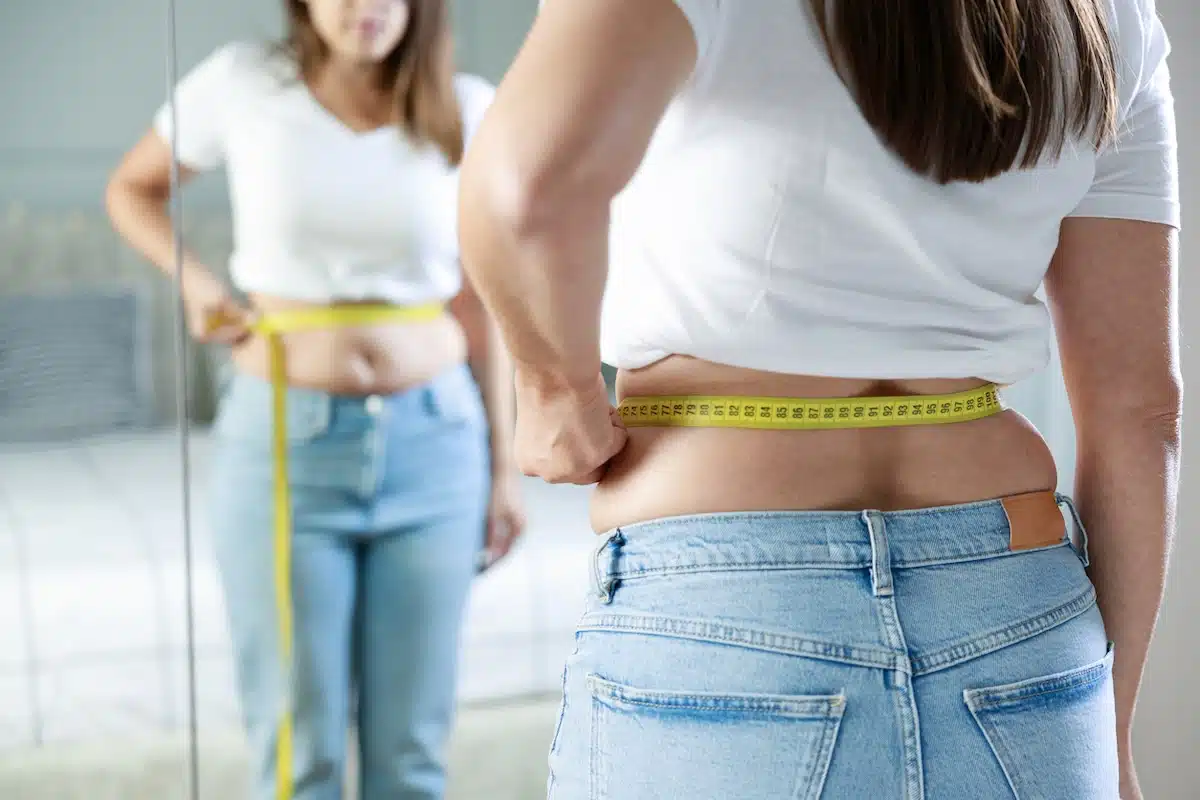
Cortisol and Weight Gain After 40: Why Losing Weight Can Suddenly Feel Harder
If you’ve reached your 40s and suddenly feel like the rules of weight loss have changed, you’re not imagining that midlife can be different.
I know this from personal experience. At 42, I’ve found that losing weight simply isn’t as straightforward as it once was. The things I could rely on when I was younger, eating a little less, fasting, exercising a little more, adding more cardio, don’t necessarily produce the same results anymore. And I’m far from alone.
Weight gain is extremely common during midlife. Aging plays an important role, but the hormonal changes surrounding perimenopause and menopause can also change body composition, particularly where we store fat. Declining estrogen is associated with a shift toward greater abdominal and visceral fat accumulation.
Then there is another hormone that seems to be everywhere on social media right now: Cortisol.
“Cortisol belly.” “Cortisol face.” “Cortisol weight gain.”
But is cortisol really making women gain weight after 40? The answer is more interesting than a simple yes or no.
What Is Cortisol?
Cortisol is often called the stress hormone, which has unfortunately given it a rather bad reputation. But cortisol isn’t something we want to eliminate. It’s actually an essential hormone produced by the adrenal glands and helps regulate everything from blood sugar and metabolism to inflammation, blood pressure and our response to stress.
Cortisol also follows a natural daily rhythm. Levels typically rise toward morning, helping us wake up and become alert, and gradually fall as the day progresses.
And when you’re faced with a stressful situation, your body releases more cortisol to help make energy available. That’s exactly what it’s supposed to do. The problem isn’t cortisol itself. The potential problem is chronic stress and inadequate recovery.
Can High Cortisol Cause Weight Gain?
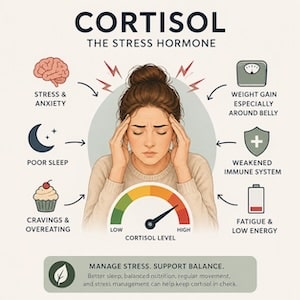
There is a genuine biological connection between cortisol, appetite and fat storage, but it’s more complicated than the popular idea that “high cortisol equals belly fat.”
We know from conditions involving prolonged glucocorticoid excess, such as Cushing syndrome, that chronically excessive glucocorticoid exposure can cause central obesity and metabolic dysfunction.
With ordinary chronic stress, the relationship is less dramatic and varies substantially between people. However, research increasingly connects long-term stress and glucocorticoid activity with changes in appetite, energy-dense food preferences and visceral fat metabolism.
And that’s important after 40 because cortisol isn’t operating in isolation.
At the same time, women may be experiencing changes in estrogen, sleep, muscle mass, insulin sensitivity, activity and appetite. It’s the combination that matters.
Why Does Weight Gain Become More Common After 40?
This is where blaming everything on cortisol misses the bigger picture. Our bodies really do change with age. We tend to gradually lose muscle unless we actively work to preserve it. Less muscle can mean lower daily energy expenditure. Activity levels can change. Sleep may become more disrupted. Stress can increase. Then perimenopause adds another layer.
As ovarian hormones change, women tend to experience a redistribution of body fat away from the hips and thighs and toward the abdomen. The Menopause Society describes aging as the primary driver of midlife weight gain while menopause plays an important role in redistributing fat toward the abdomen.
That’s an important distinction.
Menopause doesn’t suddenly override the laws of energy balance. But the biological environment in which we’re trying to maintain our weight is changing. That’s why I don’t think telling a woman in her 40s to simply “eat less and exercise more” is particularly useful advice.
Cortisol and Belly Fat After 40
One of the biggest concerns I hear about is belly fat. And there are actually two things happening here that can overlap. Declining estrogen during the menopausal transition encourages a more central pattern of fat distribution.
Chronic glucocorticoid exposure can also favor visceral fat accumulation. Visceral adipose tissue appears particularly sensitive to glucocorticoid signaling. Visceral fat is different from the soft subcutaneous fat directly beneath the skin. It sits deeper in the abdominal cavity around our organs and is metabolically active. This is why waist circumference and abdominal fat become increasingly relevant to health as we age, not simply appearance.
Excess visceral fat is associated with insulin resistance, cardiovascular disease and other metabolic problems. But this doesn’t mean every woman carrying extra weight around her middle has “high cortisol.” That’s an important myth to put to rest.
The Stress, Sleep, Hunger and Weight Loop
This may be where cortisol becomes most interesting. Imagine you’re stressed. You don’t sleep as well. You wake up tired, so you drink more coffee. You’re hungrier and find it harder to resist highly palatable foods. You don’t have as much energy to move. Your workout feels harder. You sleep badly again. And the cycle continues.
Sleep problems are particularly relevant during perimenopause, when night sweats, hormonal fluctuations and other symptoms can make good-quality sleep harder to achieve. The Menopause Society specifically identifies sleep problems and stress among the factors contributing to midlife weight gain. Read my 5 Best Biohacks for Better Sleep here.
This is one reason I think weight management after 40 needs to be viewed much more broadly than calories alone. Calories still matter. But so does the environment that influences how hungry you are, how much you move, how well you recover and how easy those calories are to manage.
Why “Eat Less and Do More Cardio” Can Backfire After 40

For decades, the standard advice for weight loss has been simple: eat less and do more cardio. At least, that’s what we millennials grew up believing. But after 40, particularly during perimenopause, that may not always be the smartest approach.
Cardio is incredibly beneficial, and I still run, play tennis and do CrossFit myself. But exercise is also a physiological stressor. Longer or harder workouts temporarily raise cortisol, which is a completely normal response.
The problem is when we keep adding training stress to a body that’s already dealing with poor sleep, hormonal changes, everyday stress and a calorie deficit.
And then there’s hunger.
I’ve noticed this myself: the more I train, the more fuel my body needs. Adding more cardio while simultaneously trying to eat less doesn’t necessarily make losing weight easier. Sometimes it simply makes me hungrier and increases the amount of recovery my body needs.
That’s why my approach has changed. Instead of trying to burn as many calories as possible, I prioritize strength training, walking and everyday movement, while still doing cardio for fitness, enjoyment and cardiovascular health.
After 40, sometimes the answer isn’t more exercise and less food. It’s finding a better balance between training, nutrition and recovery.
Why I Prioritize Strength Training After 40
If I had to choose one form of exercise that has become more important to me with age, it would be strength training.
And not primarily because of the calories it burns. Muscle is metabolically important tissue. Maintaining muscle helps support insulin sensitivity, glucose disposal, physical function, bone health and our metabolic health as we age.
Women naturally tend to lose lean mass with age, which is one reason maintaining muscle becomes increasingly important in midlife. This is why I strength train consistently at 42. I’m interested in staying lean, of course. But I’m much more interested in building a body that remains strong, metabolically healthy and capable as I get older.
And ironically, shifting the focus away from “How many calories did this workout burn?” can lead to a much healthier relationship with exercise.
Protein Becomes Even More Important
Strength training and protein belong together. Eating enough protein helps preserve lean mass, supports recovery and is also highly satiating, which can make managing hunger easier when you’re trying to lose body fat.
This is one of the biggest changes I have made in my own approach to nutrition. Rather than simply trying to make meals smaller, I focus on making them more useful: enough protein, nutrient-dense whole foods, fiber and meals that actually keep me satisfied.
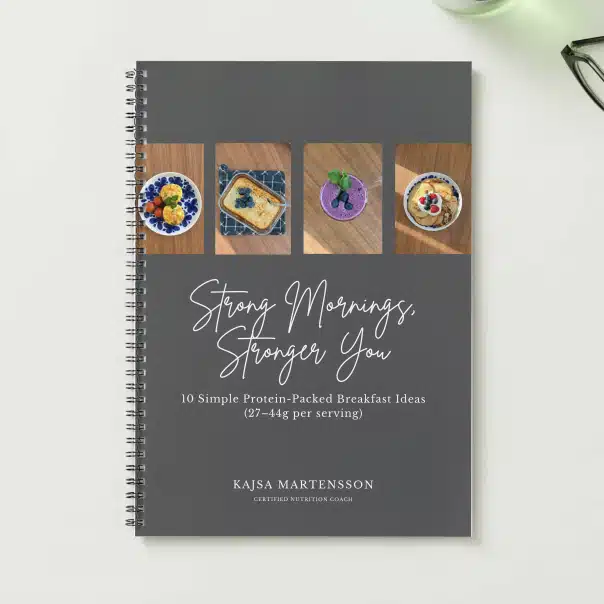
Start Your Day With More Protein
Protein becomes increasingly important after 40, especially if you want to maintain muscle while losing body fat. That’s one reason I created Strong Mornings, Stronger You, featuring 10 simple breakfasts with 27–44 g of protein.
Don’t Try to Diet Harder. Make Weight Loss Easier.
This is probably the biggest lesson I’ve learned about weight management in my 40s. I don’t want to spend my life fighting hunger. Instead, I want to structure my lifestyle so maintaining a healthy weight becomes easier. That means prioritizing protein. Strength training. Walking. Sleeping enough. Eating mostly whole foods. Managing stress. Not drinking too much alcohol.
And using harder cardio strategically rather than believing every calorie I eat needs to be “burned off.” None of those things are particularly glamorous. But together, they influence the environment in which fat loss happens.
Sleep May Be One of the Most Underrated Weight-Loss Tools
I notice the difference very quickly when I don’t sleep well. My recovery is worse. Training feels harder. And healthy food choices require more effort.
Sleep disruption is also extremely common during perimenopause, making this especially relevant for women after 40. Instead of viewing sleep as something separate from weight management, I think it deserves to be considered part of the strategy.

Protect Your Sleep After Sunset
Good sleep starts before your head hits the pillow. Evening exposure to artificial light can interfere with melatonin production and signal to your brain that it’s still daytime.
I use Swanwick blue-light blocking glasses in the evening as part of my own wind-down routine, especially when I’m watching TV or using screens.
Get 10% Off Swanwick Glasses →
Use code KAJSAMARTENSSON for 10% off.
When Is High Cortisol Actually a Medical Problem?
There’s an important difference between feeling stressed and having a medical condition that causes excessive cortisol. Cushing syndrome is a rare condition involving prolonged exposure to excessive cortisol or other glucocorticoids.
Symptoms can include central weight gain, a rounded face, easy bruising, muscle weakness, wide purple stretch marks, high blood pressure and changes in blood sugar.
If you’re experiencing unusual or significant symptoms, unexplained rapid weight gain or suspect a hormonal disorder, that’s something to discuss with your doctor rather than trying to “lower cortisol” yourself through supplements or social-media hacks.
The Rules Haven’t Disappeared. But the Game Has Changed.
I’ve found losing weight harder after 40. And I don’t think the answer is pretending that our bodies at 42 behave exactly as they did at 22.
Aging, changing estrogen levels, declining muscle mass, sleep, stress, appetite, activity and body-fat distribution can all influence weight management during this stage of life.
Cortisol is part of that picture. But it isn’t the villain. The goal isn’t to eliminate cortisol or become afraid of hard exercise. It’s to build a body that can handle stress and recover from it.
For me, that means strength training, enough protein, daily movement, some cardio, good sleep and taking recovery seriously. I still believe in challenging my body. I’ve just learned that after 40, recovery deserves a seat at the table too.
Frequently Asked Questions About Cortisol and Weight Gain After 40
Does cortisol cause belly fat?
Chronically elevated glucocorticoid exposure can promote central fat accumulation, and chronic stress may contribute to changes in appetite and visceral fat metabolism. However, belly fat after 40 cannot automatically be blamed on cortisol. Aging, declining estrogen, activity, sleep, diet, muscle mass and genetics can all contribute.
Why am I suddenly gaining belly fat in my 40s?
The menopausal transition is associated with changes in body composition and a greater tendency to store fat around the abdomen. Aging, loss of muscle, changes in activity, stress and sleep can contribute as well.
Can too much cardio increase cortisol?
Long or intense exercise can temporarily increase cortisol, but this is a normal part of the body’s response to exercise. Cardio itself isn’t inherently harmful or a cause of weight gain. The bigger concern is whether your overall training load is appropriate for your nutrition, sleep and ability to recover.
How can I lower cortisol to lose weight?
Rather than trying to manipulate cortisol directly, focus on the factors that support a healthy stress response: sufficient sleep, regular movement, appropriate exercise and recovery, adequate nutrition, stress management and moderation with alcohol and caffeine. Weight loss still requires an appropriate energy balance.
Is strength training better than cardio for women over 40?
You don’t have to choose. Strength training is particularly important for preserving muscle and bone as you age, while aerobic exercise provides major cardiovascular and metabolic benefits. A combination of strength training, aerobic activity and everyday movement is a much stronger long-term strategy than relying exclusively on either one.
Does menopause make it harder to lose weight?
It can. Aging is a major contributor to midlife weight gain, while menopause is particularly associated with changes in body composition and increased abdominal fat storage. Sleep problems, declining lean mass and lifestyle changes can make weight management more challenging as well.


