


How Modern Light Exposure Is Disrupting Your Hormones and Sleep
We Were Never Meant to Live Like This
For most of human history, light followed a predictable rhythm. Days were bright and spent outdoors, while evenings were dim and quiet, illuminated only by fire. That warm, flickering light signaled safety, rest, and the natural end of the day.
Today, our environment looks nothing like that. We are surrounded by artificial lighting from the moment we wake up until long after sunset. Screens, LED bulbs, streetlights, and indoor lighting constantly expose our eyes to blue, flickering light. That’s a signal our biology still interprets as daytime.
Our eyes may have adapted to this modern world, but our hormones haven’t. And the consequences show up as poor sleep, hormonal imbalance, elevated stress, and a circadian rhythm that never quite knows when to switch off.

Why Light Is the Most Powerful Circadian Signal
Your circadian rhythm is your body’s internal 24-hour clock. It doesn’t just control sleep. It orchestrates hormone release, metabolism, digestion, body temperature, and cellular repair.
Light is the strongest signal this clock responds to. When light enters your eyes, especially blue-wavelength light, it tells your brain that it’s time to be alert, productive, and awake. This is exactly what you want in the morning and during the day.
The problem arises when that same signal continues late into the evening.
Blue Light, Melatonin, and Hormonal Confusion
Blue light directly interferes with melatonin, the hormone responsible for initiating sleep and supporting nighttime repair. When melatonin is suppressed or delayed, falling asleep becomes harder, sleep becomes lighter, and the body misses out on deep restoration. (If you’re not sleeping well, don’t miss our 5 biohacks for better sleep).
Over time, this doesn’t just affect sleep. Cortisol remains elevated later into the evening, insulin sensitivity can decline, hunger hormones become dysregulated, and recovery suffers. The result is a body that feels tired but wired. It’s calm enough to sit still, but not relaxed enough to truly rest. This is why light exposure isn’t just a sleep issue. It’s a hormonal one.
Screens: A Modern Habit With Ancient Consequences
Screens intensify the problem because they deliver blue light directly into the eyes at close range. This often happens at the exact time our biology expects darkness. Evening scrolling, watching TV in bed, or working late on a laptop sends a strong “daytime” signal to the brain, even when the body is exhausted. This disconnect between physical tiredness and hormonal signaling is one of the main reasons so many people struggle to fall asleep, stay asleep, or wake up feeling restored.

What Our Biology Still Expects
Our ancestors didn’t need sleep hacks or blue light blockers because their environment did the work for them. Bright daylight during the day naturally suppressed melatonin and raised cortisol in the morning. Darkness and firelight in the evening allowed melatonin to rise without effort.
While we can’t fully recreate that environment (especially in northern countries with long winters and limited daylight), we can give our bodies clearer signals.
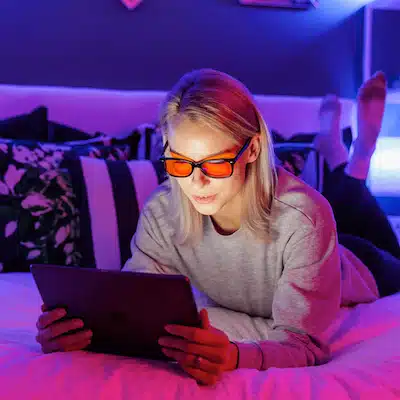
A small evening habit that makes a big difference
One of the simplest ways I support my circadian rhythm in the evening is by reducing blue light exposure. I use Swanwick blue light–blocking glasses in the hours before bed to help my body recognize that it’s time to wind down. By filtering out the wavelengths that suppress melatonin, they make it easier for my nervous system to shift into rest mode. Especially on screen-heavy days.
If you want to try them yourself, you can get 10% off Swanwick glasses using my link.
Morning Light: The Reset Button Most People Ignore
One of the most powerful ways to support your circadian rhythm is exposure to natural light early in the day. Morning sunlight helps shut down melatonin, triggers a healthy cortisol rise, improves alertness, and sets the timing for melatonin release later that evening.
In many ways, morning light acts like setting a timer. When your brain knows when the day started, it knows when the night should begin.
Why Evenings Need Warmth, Not Brightness
As the day winds down, your body needs a clear signal that it’s safe to rest. That signal comes from dimmer light, warmer tones, and reduced stimulation. Red and amber light don’t suppress melatonin in the same way blue light does, which is why firelight felt so calming to our nervous system.
Modern lighting often does the opposite – bright, cool and directly overhead – which keeps the brain in a semi-awake state long after sunset.
My Personal Evening and Morning Rhythm

This is why I’m very intentional about light and routines in my own life. In the evening, I avoid late, heavy meals because digestion competes with sleep. If I’m hungry, I keep it light and usually have a protein shake or some Greek yogurt.
About two hours before bed, I put on my blue light blockers from Swanwick. This simple habit makes a noticeable difference in how quickly my body starts to wind down.
Before sleep, I take magnesium glycinate and use my vagus nerve stimulator to help my nervous system shift into a parasympathetic, relaxed state.
In the morning, I prioritize natural sunlight as early as possible, even on cloudy days. That first light exposure sets the rhythm for the entire day and improves my sleep later that night.
When Light Works Against You
Problems arise when bright light dominates evenings and darkness is missing from nights. Irregular sleep schedules, late-night screen use, cool LED lighting, and a lack of morning daylight all blur the signals your circadian system relies on. None of these habits are harmful on their own, but repeated daily, they keep the internal clock slightly out of sync.
You don’t need perfection, gadgets everywhere, or a monk-like lifestyle. Supporting your circadian rhythm is about sending clearer signals with bright days, dim evenings, and consistency over time. Light is not just illumination. It’s information. And when you give your body the right information at the right time, sleep improves, hormones settle, and long-term health becomes easier to maintain.
Modern light exposure is one of the most overlooked disruptors of health. But it’s also one of the easiest to improve. Sometimes, the most powerful longevity decision isn’t adding something new. It’s simply learning when to turn the lights down.



Pingback: If You Care About Longevity, These Health Areas Matter the Most
January 29, 2026 at 7:10 am